
By Peri Dworatzek
IEFLL Partnership Coordinator
PhD Student at York University
August 2026
A simple way to understand sustainability is to see what is available versus what is being used. Financially, people use this framework to budget and make daily lifestyle choices. The same idea applies to natural resources through the ecological footprint and biocapacity accounting framework. Neil Gow, a PhD student at the University of Stirling, believes this is an incredibly important area of research and that no amount of greenwashing can change the message that humans are demanding more from the environment than is available.
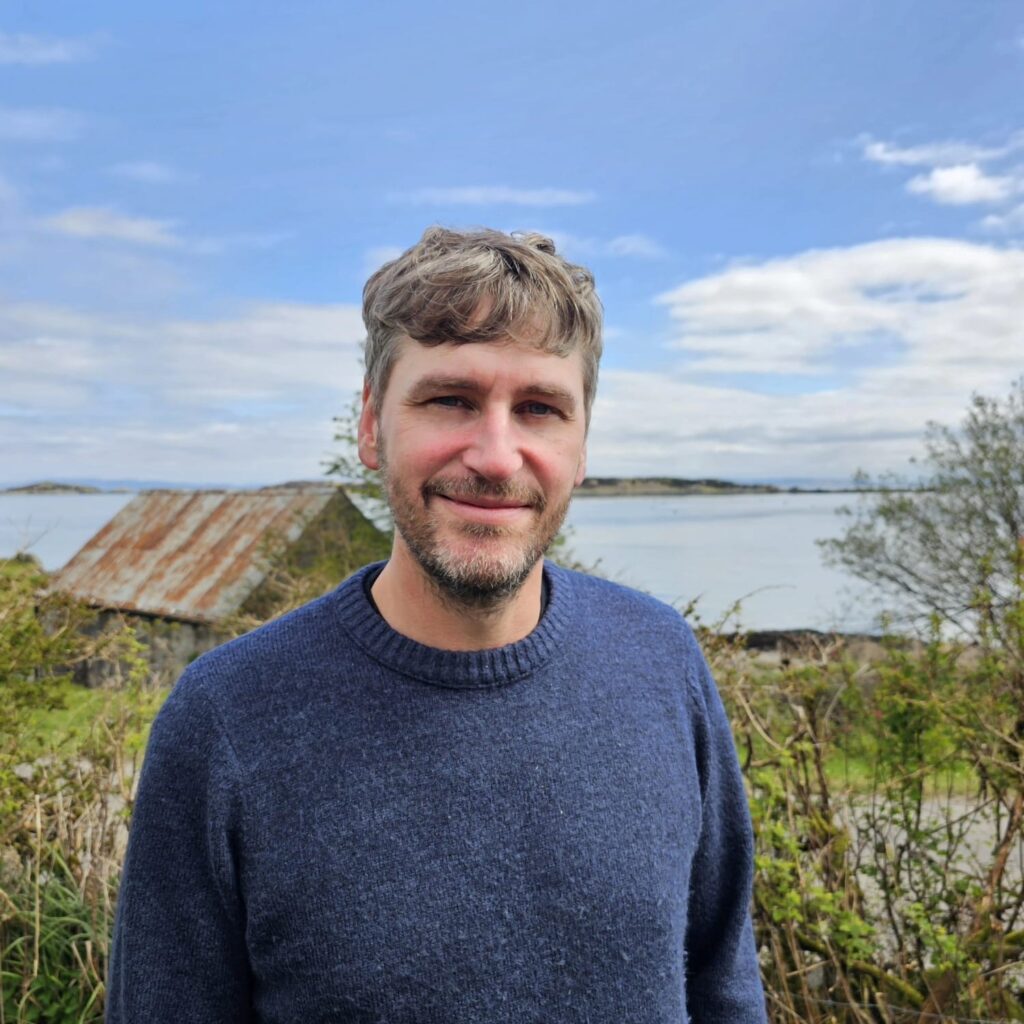
Neil Gow studies in the Department of Biological and Environmental Sciences at the University of Stirling in Scotland and is supervised by Prof. Andrew Tyler. Neil’s research is part of the Hydro Nation Chair research and innovation program that aims to bring research communities together to achieve net-zero emissions in the Scottish water sector.
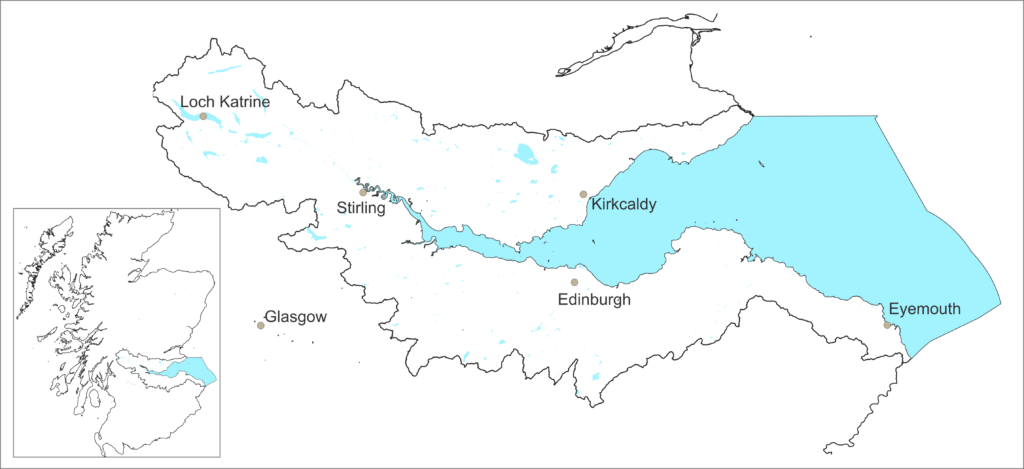
For this research, Neil is developing an ecological footprint and biocapacity framework at the water catchment scale in Scotland. The aim is to understand how water-sector industries influence the ecological balance of the River Forth Catchment.
This catchment region is in central Scotland, spanning the cities of Stirling and Edinburgh. The River Forth also supplies water to Glasgow, meaning that roughly 50% of Scotland’s population relies on water from this region. An example of the activities that Neil will investigate is the effect of large-scale land management initiatives to protect the water supply, and how this may also enhance biocapacity.
Although the geographical boundary of a catchment region is most relevant to industries within the water sector, water management directly affects other industries. For instance, agricultural productivity is impacted by the quantity of water coming through the catchment region – crops become vulnerable due to lack of water. This is one reason the ecological footprint accounting framework is valuable for quantifying sustainability in this context, because it shows the interrelationships between different natural resources.
Before entering the PhD program, Neil worked on various sustainability projects quantifying carbon emissions. Neil completed his bachelor’s and master’s degrees at the University of Highlands and Islands in rural development and sustainability, where he studied how to measure regional sustainability and researched barriers to domestic renewable energy in remote rural areas. He then put this work into practice at the Scottish Government’s Carbon Neutral Islands program, where he identified opportunities to reduce carbon emissions that also benefit local communities.
In Neil’s previous work, one issue that continually resurfaced was the less obvious material footprint flows that accompany the carbon footprint flows. Neil found that many initiatives in Scotland measured carbon footprint decreases and material footprint increases, highlighting the need to look beyond carbon emissions and measure resource consumption as well. Neil’s experience has shown him that reducing resource consumption and emissions is just as much a local-scale issue as it is a national issue. People living in the community have on-the-ground experience and provide key information to support decision-making that reduces environmental impact while supporting community prosperity.
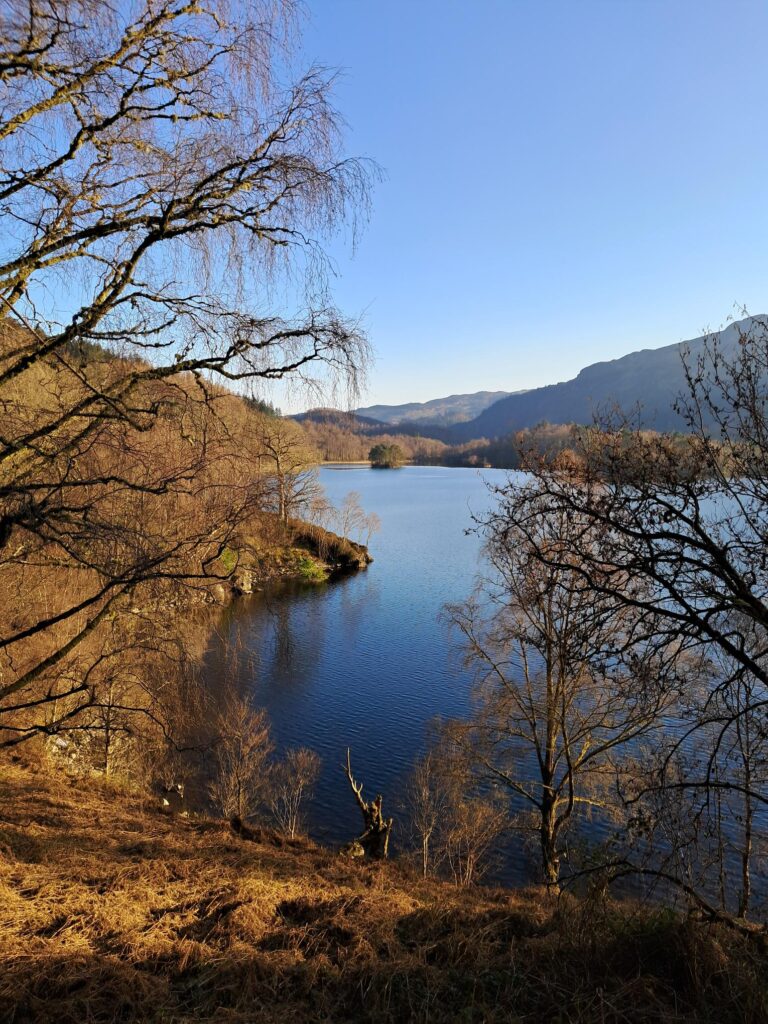
Neil hopes that his research will provide Scottish industries and policymakers with evidence on the state of regenerative resources in the River Forth catchment. Broadly speaking, his research will present results on the local and global demand for resources in the catchment and reveal the region’s vulnerabilities to a changing climate. Neil is also developing a framework so footprint data can be easily and reliably scaled to other regions in Scotland.
A unique aspect of Neil’s research is his aim to improve understanding of water in ecological footprint accounting. There is a lot of previous research on water footprints, but Neil finds it challenging to place this within the context of ecological footprint and biocapacity using global hectares. Another challenge he aims to resolve is better defining and measuring inland waters compared to marine waters.
Neil has found it beneficial to connect with researchers in the International Ecological Footprint Learning Lab (IEFLL) to understand their different challenges and priorities, which often relate to the location and scale of the research. Neil’s participation in the International Ecological Footprint Learning Lab (IEFLL) has helped him connect with researchers using the same metric. He is finding it valuable to understand the different challenges and priorities based on the location and scale of research. It is also encouraging to see others working in this important area of research, which provides evidence for governments and industries to make decisions that benefit people and the planet.
Leave a Reply
You must be logged in to post a comment.