
Joanna, York University, IEFLL cohort one

The Ecological Footprint courses were a fantastic learning opportunity and one of the highlights of my Master’s degree! In the Ecological Footprint Applications course, I gained an understanding of how the Ecological Footprint can serve as a sustainability metric and Biocapacity accounting system to measure environmental impact. I then had the opportunity to apply these theories and concepts in the EF Informatics course, where I developed my skills with various analytical tools and languages such as MySQL, R, and GIS.
Eric Miller, along with Teaching Assistants Peri and Kiona, made this experiential learning course both engaging and incredibly valuable as we were able to work with real national accounts data. For my final Ecological Footprint project, I chose to analyze the global impact of electrifying cars. Using Ecological Footprint databases, I calculated and created data visualizations to demonstrate the estimated reduction in emissions for each country.
Petra, University of Iceland, IEFLL cohort two
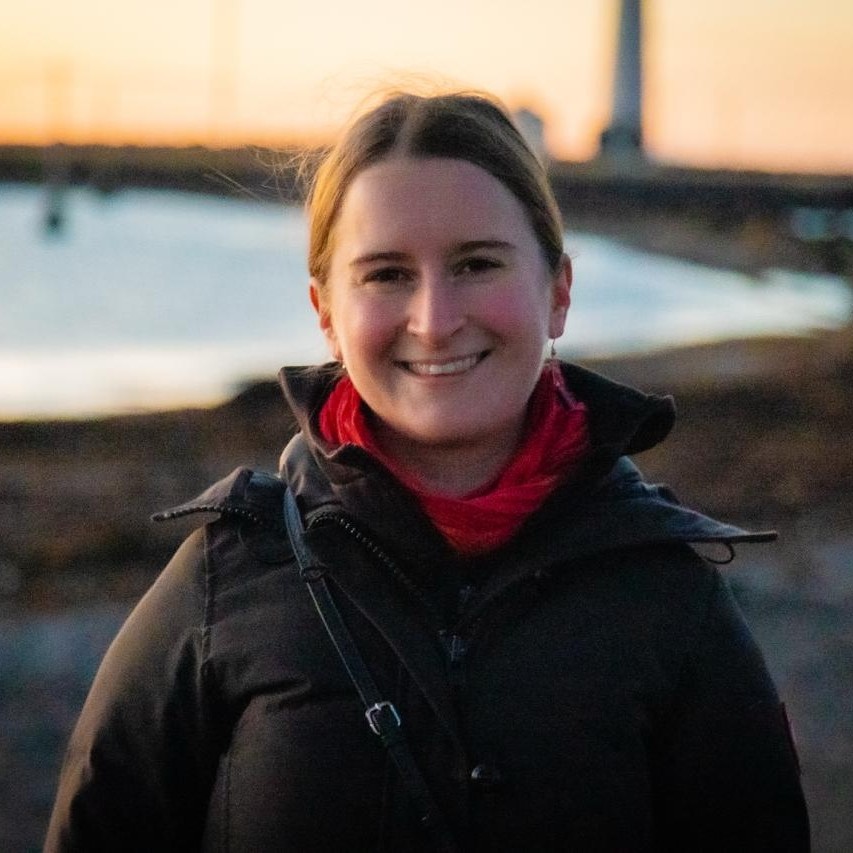
The Ecological Footprint Applications course was a great opportunity for me to build not only knowledge on Ecological Footprint Applications, but also a transatlantic bond with students at York University. It’s also one of the few courses I’ve had where students deeply engage with required literature through the 1st hour discussions. I really appreciate the fact that it’s possible to participate in learning across an ocean and to make a 5-hour time difference and a completely different academic calendar work – it’s quite special and there are not many other programs like it.
Neha, York University, IEFLL cohort one

The Ecological Footprint Initiative courses introduced me to key concepts like Ecological Footprint and Biocapacity, helping me understand how we can measure the balance between human demands on nature and the Earth’s ability to regenerate. The course explored real-world application of sustainability by examining consumption, production, and planetary boundaries. Additionally, the course introduced SQL, R, and advanced Excel, while also encouraging critical thinking.
Building on that foundation, I had an incredible opportunity to work as a Data Analyst with the Ecological Footprint Initiative. In this role, I worked with global datasets from organizations such as the United Nations, World Bank, and International Energy Agency, transforming complex data into meaningful insights. This experience strengthened my skills in data analysis, SQL, and quality assurance, while also teaching me how to navigate the complexities of large-scale environmental databases.
Beyond the technical aspects, what stood out most was working with a dedicated team committed to utilizing global dataset to produce meaningful and actionable document. Seeing how this research informs policy, and decision-making has been truly inspiring, and I’m grateful to be part of the team.
Matt, University of Iceland, IEFLL cohort one

Through the IEFLL partnership, I was introduced to the Ecological Footprint and had the opportunity to incorporate it into my master’s studies at the University of Iceland. The format of the partnership allowed for me to take several courses where I developed transferable skills – including the handling, processing, and visualization of data using tools such as SQL, R, and Excel – and to apply this training by helping produce the National Ecological Footprint and Biocapacity Accounts as a summer data analyst. The experience was a great opportunity to expand my toolkit of environmental monitoring methodologies, and ultimately led to an interest in the Ecological Footprint that I have since carried over into a PhD project