

By Peri Dworatzek
IEFLL Partnership Coordinator
PhD Student at York University
June 2026
Neha Basnet, Data Analyst and Researcher at the Ecological Footprint Initiative at York University, co-produces the National Ecological Footprint and Biocapacity Accounts (NEFBA). Neha is one of the team-leads training the new data analysts as they officially started the 2027 edition production a few weeks ago.
On a day-to-day basis, Neha cleans and transforms large datasets and improves the data flow, all preparing to generate the final ecological footprint and biocapacity results. Neha also researches new datasets to improve footprint data reliability. One research question she is investigating is the potential to include methane emissions into NEFBA, but the challenge here is access to global and reliable data sources.
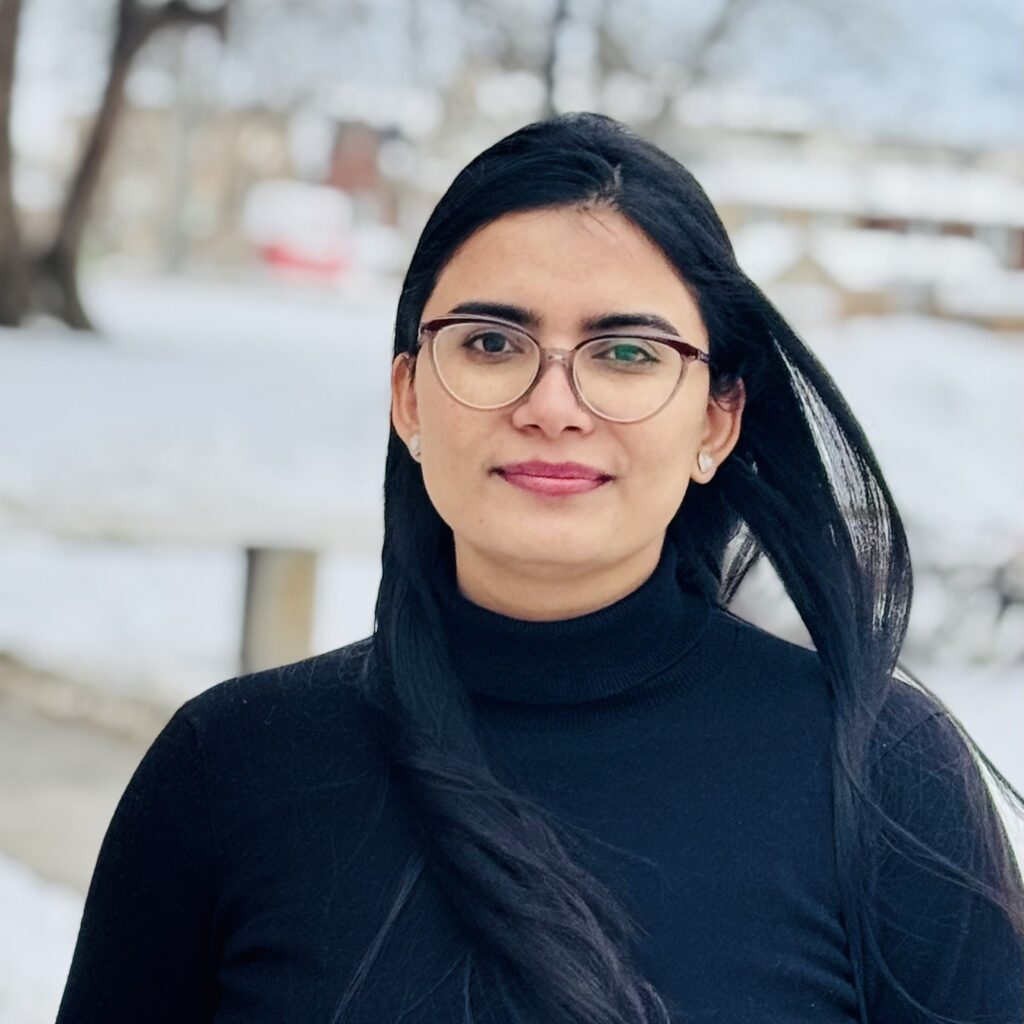
On a day-to-day basis, Neha cleans and transforms large datasets and improves the data flow, all preparing to generate the final ecological footprint and biocapacity results. Neha also researches new datasets to improve footprint data reliability. One research question she is investigating is the potential to include methane emissions into NEFBA, but the challenge here is access to global and reliable data sources.
Before moving from Nepal, Neha completed a Masters degree in water resource management. Neha worked on several projects in Nepal with water policy thinktanks that engaged local communities, grassroots movements, and governments that supported river basin development and management in the Kamala Basin to understand how communities use and depend on the water source for agriculture, sanitation, and other purposes. The project aimed to understand the everyday barriers to accessing water facilities, especially for marginalized communities and helped inform strategies for sustainable water-resource management and livelihood security . Another project she worked on concerned access to sanitary water for low income and rural Nepali communities. Neha also worked on a hygiene awareness program with young women and girls in rural Nepal. These projects gave Neha first-hand experience learning how planning and political decisions impact the lives of marginalized communities.
Neha immigrated to Canada to start the Masters in Environmental Studies (MES) program at York University. Neha built on her practical experience where her research focused on the effectiveness of source water protection in Ontario. Her main research question explored if source water protection plan improved access to safe drinking water. Neha’s research revealed challenges related to funding, changing legal regimes, and public participation. After completing the MES degree, Neha began working fulltime with the Ecological Footprint Initiative.
An area that Neha wants to explore more, is increasing the use of footprint data across sectors. For instance, how can this data be useful for environmental planning versus economic development versus grassroots movements. Neha believes there is a lot of important research in the partnership to bring academics in conversation with governments and other stakeholders. She believes there is potential to enhance cross- sectoral engagement and collaboration because the NEFBA are a comprehensive and global dataset. Neha is also interested in linking her previous water management work to the footprint methodology, including questions about equitable access.
Neha believes that global collaboration is key to improving data quality and is what makes the NEFBA more credible because different researchers and practitioners identify gaps and inconsistencies. Beyond the technical aspects, Neha sees sectoral collaboration as important to build trust between scientists and community members. When community members contribute knowledge, the empirical evidence becomes stronger and more relevant.
Sustainability challenges are not bound by international borders; therefore, sustainability research requires global data, methods, and perspectives. Neha believes that the NEFBA is not just a dataset, but a part of the larger conversation about humanity’s demand on nature. Neha is interested in how researchers translate these numbers to communicate and disseminate knowledge. Working with the Ecological Footprint Initiative and the International Ecological Footprint Learning Lab has made Neha think more deeply about her connection with nature and the everyday choices she makes.
Leave a Reply
You must be logged in to post a comment.