

Edited by Peri Dworatzek
IEFLL Partnership Coordinator
PhD Student at York University
May 2026
In April 2026, IEFLL-affiliated students, researchers, and other collaborators came together to share proposed and active research involving ecological footprint and biocapacity. This was the second edition of the research symposium, this time with more presenters from more postsecondary institutions. Fourteen presenters gathered at this virtual event from five post-secondary institutions and four countries around the world.
The IEFLL partnership is an international, multistakeholder partnership bringing together academics and practitioners to quantify and track global and regional sustainability through the use of ecological footprint and biocapacity metrics. Graduate students at York University and the University of Iceland are trained in sustainability informatics to access and clean large datasets and analyze and visualize important data. Through IEFLL, students and researchers produce the National Ecological Footprint and Biocapacity Accounts (NEFBA) – a large dataset containing Ecological footprint and Biocapacity data for every country in the world on a timeline from 1961 to 2024.
The aim of the 2026 research symposium was to share ongoing and future research on ecological footprint and biocapacity. While also fostering spaces of conversation for feedback and collaborations. The abstracts for each presentation and presenter information is organized below to share the current research that is being done in the IEFLL partnership.
Digging the Roots: Integration of alternative agricultural practices into Ecological Footprint and Biocapacity Accounting

Matthew Lawrence, Masters student at York University. Matthew is proposing this research.
In the last 25 years, the amount of land being farmed organically has almost quintupled from just under 20 million hectares to 98.9 million hectares as of 2024. This research asks (i) Can this transition be seen in the ecological footprint and biocapacity accounts and in what areas? (ii) Can this impact be calculated using existing data sources engaged with by the EF & BC accounts?
Expressing the Material Footprint in Global Hectares: A Circular Reinterpretation of Yield in Ecological Footprint Accounting
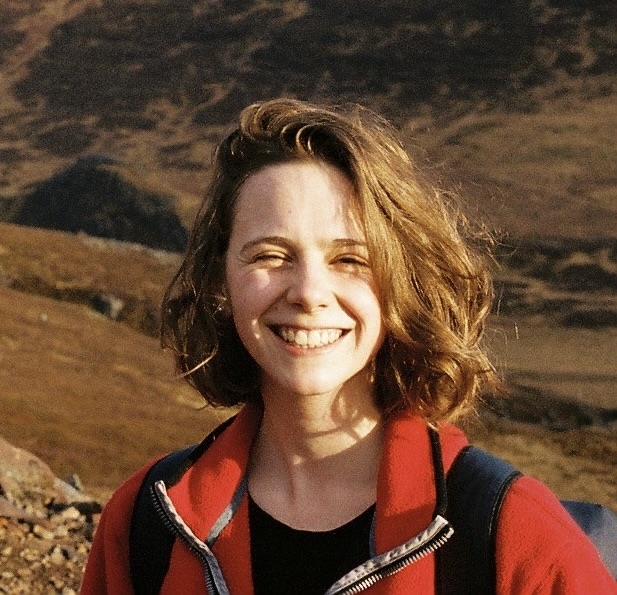
Jade Emma Farabet, Masters student the University of Iceland. Jade is currently conducting this research.
This project addresses a key limitation of the Material Footprint by exploring how its mass-based accounting can be better aligned with ecological limits. Building on Ecological Footprint logic, it reinterprets the Yield Factor as a measure of circular productivity for selected materials, using recycling rates as a proxy. This pilot study examines the feasibility of integrating regenerative-capacity thinking into material accounting and tests how variations in circular yield affect the area-based representation of material consumption.
Accounting for Wetlands in Biocapacity
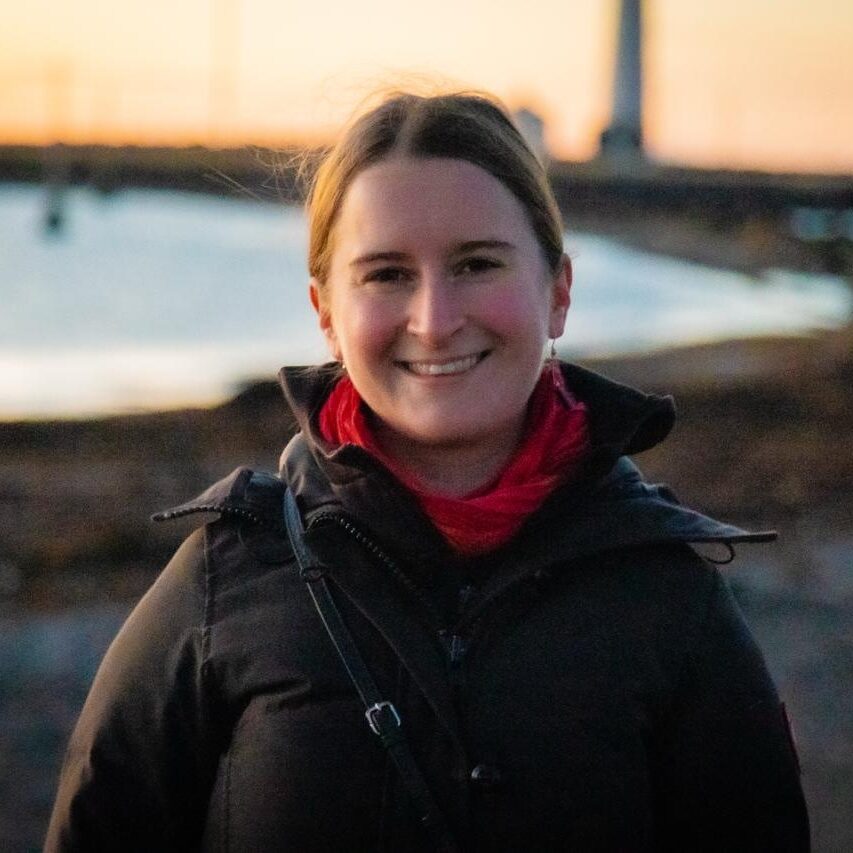
Petra Dimitrova Toneva, Masters student at the University of Iceland. Petra has completed this research.
This MSc thesis incorporates wetlands into Biocapacity accounts by using global datasets on wetland area and productivity (NEP) to build national estimates for Iceland, Sweden, and Germany from 1961 onward. Results show that Biocapacity outcomes are highly sensitive to data sources and methods, highlighting significant uncertainties in quantifying wetlands. While inclusion improves recognition of wetlands’ importance, it mainly strengthens qualitative understanding, exposing limits in representing complex ecosystems within mechanistic sustainability indicators.
Ecological Footprint and Biocapacity as a Public-Facing Environmental Assessment Tool
Kaitlin Pal, Masters student at York University. Kaitlin is proposing this research.
This research project explores the potential for Ecological Footprint and Biocapacity (EFB) accounting to function as a form of Environmental Assessment (EA) for use by the public in terms of evaluating development projects. By experimenting with data inputs, outputs, and scales, this project will test the ability to use EFB as an alternative and/or supplementary indicator in the EA process. This project will explore the capacity of EFB to be used as a practical, communicative tool for project evaluation and public engagement in environmental decision-making.
Measuring Transition Risks in a Low-Carbon Economy as for now?
Yuhui Li, Masters student at the University of Iceland. Yuhui is proposing this research.
My research focuses on transition risk in the shift to a low-carbon economy, particularly how such risks are captured within financial systems. Rather than examining physical risks, this study concentrates on risks driven by policy, market, and technological changes, and how these are reflected in financial outcomes. The core question of this thesis is: to what extent can existing financial and sustainability indicators capture transition risk, and do they fully reflect its underlying dimensions? And to extend, does ecological footprint provide additional explanatory power beyond the current indicators such as carbon and ESG in capturing transition risk?
Re-envisioning ecological footprint calculators as community tools
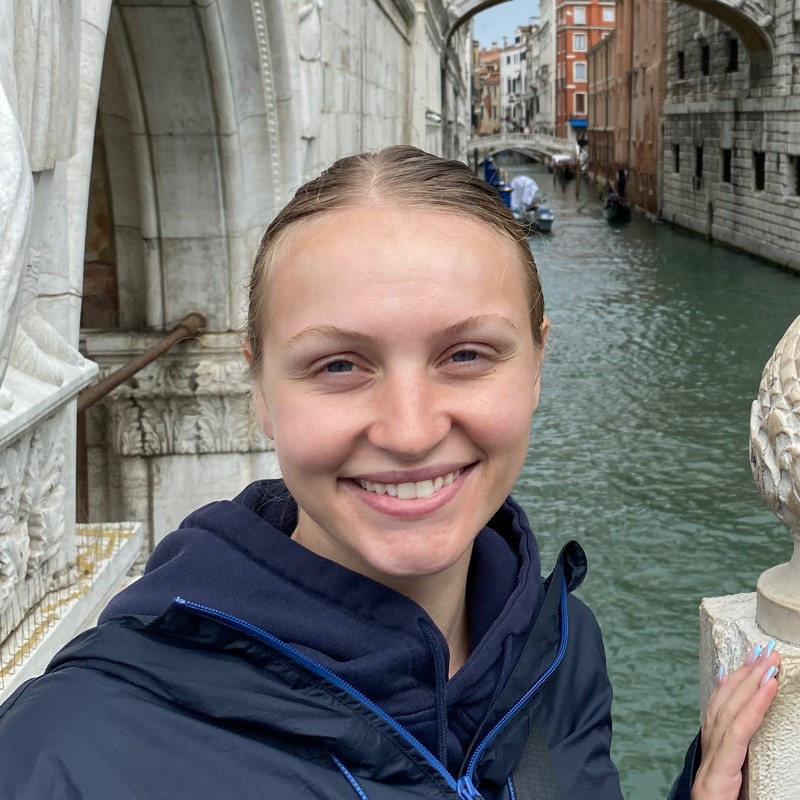
Peri Dworatzek, PhD student at York University. Peri is proposing this research.
Ecological footprint calculators are sustainability tools used to track individual or household consumption. These tools are used to track environmental impact and behaviour change for increasing pro-environmental behaviour. These calculators are often overly individualistic and that limits the type of behaviours that people will change. This research employs new institutionalism and the Institutional Analysis Development (IAD) as developed by Elinor Ostrom to re-envision ecological footprint calculators as community tools. This research will assess if this innovation approach to ecological footprint calculators can change individual and group behaviour to be more pro-environmental.
Extending Ecological Footprint Accounts with Burden-Benefit Decomposition

Deborah King, Masters student at York University. Deborah is proposing this research.
My proposed research looks at the mismatch between where ecological burdens occur and where economic value is captured in global supply chains. Using Ecological Footprint (EF) accounting alongside Trade in Value Added (TiVA), I examine how export-driven production influences who bears environmental costs and who benefits economically.
Who decides what matters – Us or the model? Paradigmatic commitments in the modeling of systemic transformation
Clara Barbara Stephan Klinkenberg, Masters student at the University of Iceland. Clara is currently conducting this research.
My research investigates how various computational modeling paradigms differ in their capacity to represent systemic transformation, which I then applied to existing sustainability transformation models. I first assessed their ability to capture structural change through my paradigm framework and then examined their capacity to assess sustainability by checking whether they generate sufficient outputs to derive representative indicators like the Ecological Footprint and Gini coefficient to measure the resulting system states.
Domestic biofuel development and deployment in Iceland’s fishing fleet: opportunities and challenges

Matthew Don Reimer Dyck, PhD student at the University of Iceland. Matthew is currently conducting this research.
As Iceland’s fishing fleet seeks to meet looming decarbonisation targets by deploying alternative fuels, considering domestic production pathways offers a means to simultaneously promote energy security by reducing reliance on imported fossil fuels. While much of the focus in this regard has been on hydrogen-based fuels, near-term challenges to scaling up their domestic production and utilisation warrant deeper investigations into the potential role for biofuels. This project contributes to these aims by assessing the opportunities and challenges for domestically produced biofuels to contribute to the maritime fuel transition through the application of environmental and economic life cycle assessment, as well as Ecological Footprint analysis.
Ecological macroeconomic modeling of Canada with LowGrow SFC

Andrew Reeves, Postdoctoral researcher at York University. Andrew is currently conducting this research.
I work with Peter Victor on LowGrow SFC, a Canadian macroeconomic model that relates the economy to material and ecological quantities. I will share some of what makes our modeling approach unique in Canada and how we have been updating LowGrow’s ability to model sustainable post-growth futures. I will briefly touch upon current work which includes incorporating feedback from the environment, for example via climate damages.
Integrating Ecological Footprint Analysis into the Performance Assessment of Blue-Green Roof Systems
Rodrigo Marcel Ramirez Guisse, Masters student at the British Columbia Institute of Technology. Rodrigo is currently conducting this research.
This research explores the integration of ecological footprint analysis into the assessment of blue-green roof systems. While existing work has focused on water and thermal performance, this study introduces an ecological perspective to evaluate the overall environmental impact of these systems. By comparing ecological demand with the biocapacity generated by vegetation, the work aims to support more informed decision-making in the design and implementation of blue-green roofs.
Evaluating the Ecological Footprint of Ontario’s Major Landfill Sites

Bumika Srikanthalingam, Masters student at York University. Bumika is currently conducting this research.
This paper addresses Ontario’s landfill capacity crisis through estimating the ecological footprint of the province’s six largest landfills by disposal capacity. Through quantifying the ecological footprint consumed by landfill operations and recoverable landfill materials, this work reveals the unsustainable biophysical demands of excessive landfilling on Ontario’s natural capital. This analysis demonstrates the value of ecological footprint assessments in waste management research, providing a comprehensive indicator for communicating ecological overshoot.
Ecological Footprint and Biocapacity Assessment of the University of Sri Jayewardenepura, Sri Lanka

Nethmi Weerakkodi, Bachelor’s of Science student at the University of Sri Jayewardenepura. Nethmi has completed this research.
This research assesses the ecological footprint and biocapacity of the University of Sri Jayewardenepura, covering campus emissions and land use over the period 2022–2024. It uncovers key emission hotspots and a considerable gap between the university’s ecological demand and its campus biocapacity. The findings contribute to filling a clear gap in sustainability research within Sri Lankan higher education, offering a baseline that other institutions in the region could build on.
Earth Overshoot and the Forth Catchment, Scotland
Neil Gow, PhD student at the University of Stirling. Neil is currently conducting this research.
My PhD research explores the Scottish Water sector’s potential to influence the ecological resource balance both locally and globally. Biocapacity and Ecological Footprint are estimated for the Forth catchment in Scotland. This framework will be used as a platform to understand the potential impact and influence of various interventions, including large scale land management activities.
Leave a Reply
You must be logged in to post a comment.