

By Peri Dworatzek
IEFLL Partnership Coordinator
PhD Student at York University
May 2026
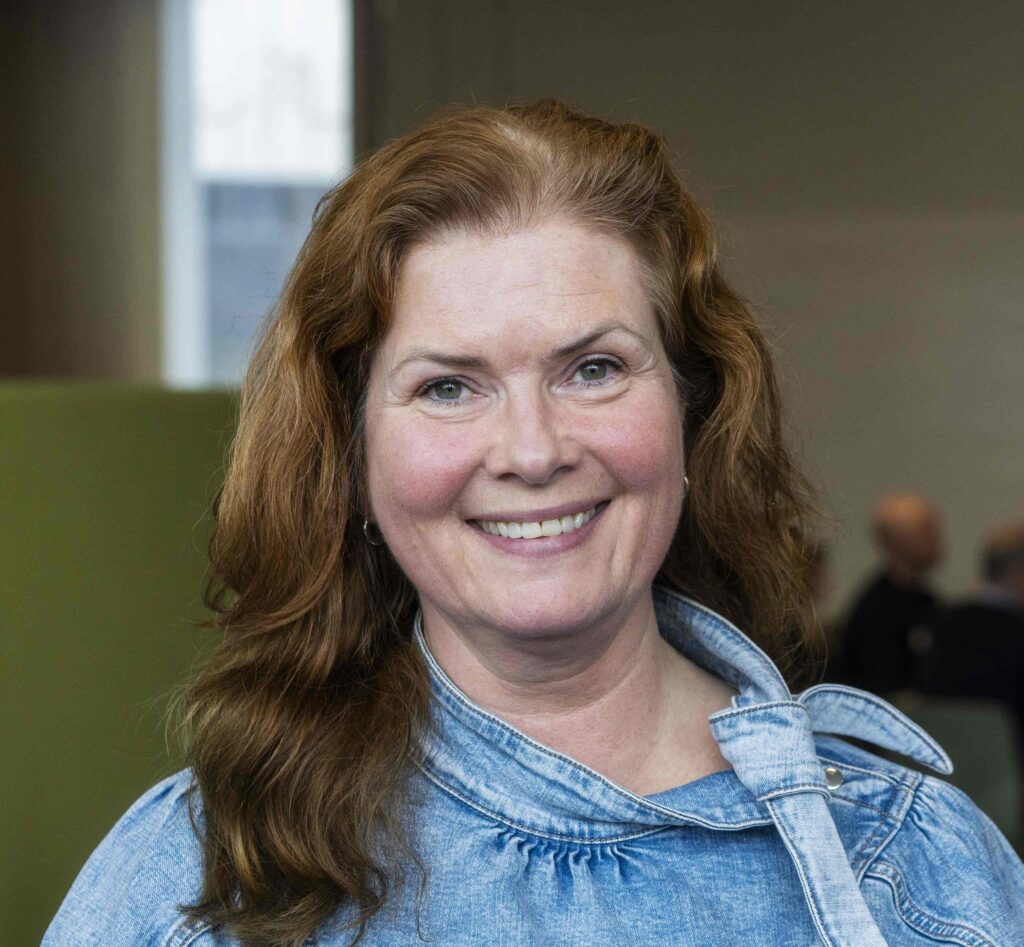
Iceland’s capital, a city of 140,000 people, has an impressive track-record measuring and reducing environmental impact. Hrönn Hrafnsdóttir, the head of the climate change unit at the City of Reykjavík, leads several projects mitigating and adapting to the effects of climate change at the municipal level.
This fall is an important milestone for the City of Reykjavík as the Climate City Contract is being renewed. Hrönn leads the development of this contract that represents the City of Reykjavík’s commitment to being climate neutral by 2030. This climate contract brings together government, residents, and industry to collaborate and build a coordinated action plan.
The climate contract is part of the framework that connects 112 European cities to be climate neutral and smart by 2030. The aim of this European Union project is to bridge gaps between different local-level stakeholders. In Reykjavík, stakeholders such as municipal-owned companies (e.g. energy infrastructure, transportation, postal services), business associations and industry (e.g. waste companies), and city departments connect to focus on becoming more sustainable. This kind of coordinated collaboration across sectors is important in advancing climate goals that meet the needs of the local community.
The City of Reykjavík is also a member of the Global Covenant of Mayors for Climate and Energy. This requires the City of Reykjavík to complete a greenhouse gas (GHG) emissions inventory every year and disclose the results publicly; Reykjavik has chosen to release the results on their own website and on the Carbon Disclosure Project portal (CDP). In addition, to these local and international projects, Hrönn is a member of the International Ecological Footprint Learning Lab (IEFLL) partnership, where she advised a master’s student at the University of Iceland. The City of Reykjavík is also a member of the Global Covenant of Mayors for Climate and Energy. This requires the City of Reykjavík to complete a greenhouse gas (GHG) emissions inventory every year and disclose the results publicly; Reykjavik has chosen to release the results on their own website and on the Carbon Disclosure Project portal (CDP). In addition, to these local and international projects, Hrönn is a member of the International Ecological Footprint Learning Lab (IEFLL) partnership, where she advised a master’s student at the University of Iceland.
Before working for the City of Reykjavík, Hrönn established a career in the private sector in human resources and communications. During 2008-2011 major financial crisis in Iceland, Hrönn lost her job. This was an opportunity that allowed Hrönn to pivot into the environment field. Hrönn went back to school to receive a Master’s in Science from the Energy and Natural Resources program at the University of Iceland. It was during the Master’s that Hrönn took a course on local climate change affairs and went to COP15 in Copenhagen and became interested in driving local level climate action.
After finishing the Master’s program, a job at the City of Reykjavík became available to lead environmental management systems, including Green Steps for Reykjavík. Climate change issues were always part of Hrönn’s job at the City of Reykjavík, but the focus on climate change grew exponentially after the Paris Agreement was signed. The signing of the Paris Agreement meant that non-state actors such as cities, companies, and NGOs have a role in adapting and mitigating climate change. This political momentum changed local operations, eventually leading the City of Reykjavík to declare political ambition of carbon neutrality by 2030.
Several years later, Brynhildur Davíðsdóttir, approached Hrönn at the City of Reykjavík to be a member of the IEFLL. Hrönn was interested to learn how ecological footprint goes beyond GHG emissions inventories (which the City already did). At the beginning, Hrönn found it challenging to familiarize herself with the ecological footprint framework. Yet once she did, Hrönn found it easier to connect to than CO₂ measurements. For instance, it’s easy to understand and relate the food one eats to an area of cropland than connecting it to tons of emissions which are not visible.
As part of the IEFLL partnership, Hrönn advised Rakel’s master’s thesis research to generate ecological footprint data for the City of Reykjavík. Rakel applied a similar methodology as was used to generate ecological footprints for Ontario cities.
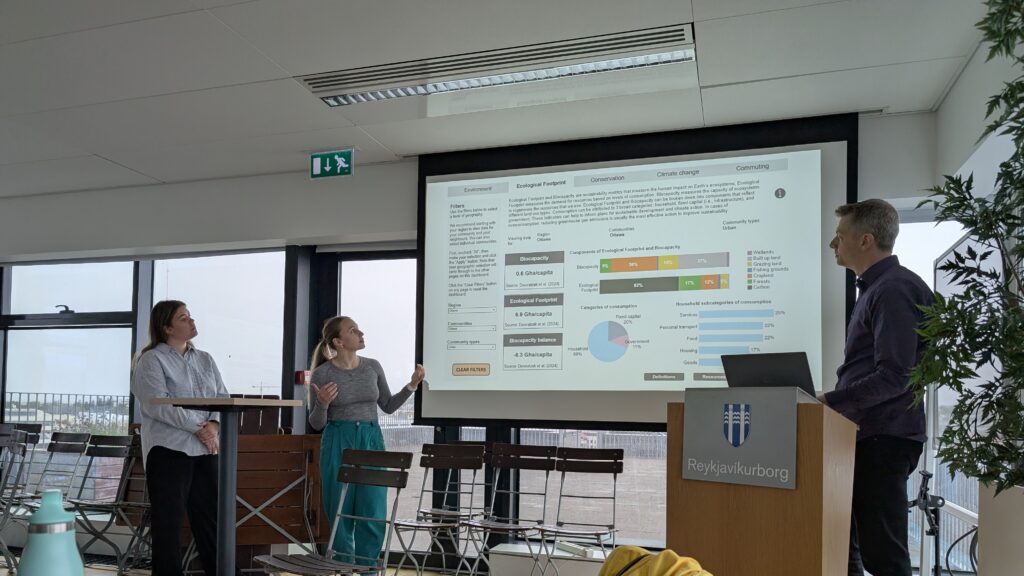
Rakel Bærings Halldórsdóttir, Peri Dworatzek, and Eric Miller presenting to employees at City of Reykjavík during an IEFLL partner visit in June 2025
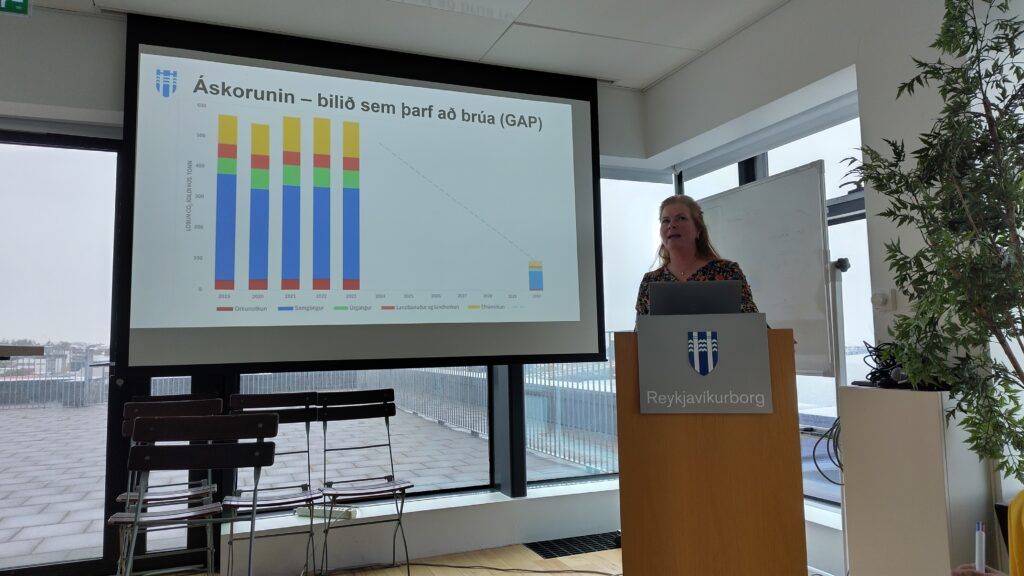
Hrönn Hrafnsdóttir presenting to IEFLL members and students during a partnership visit in June 2025
Hrönn noted an important takeaway from Rakel’s research is that the ecological footprint framework connects people to nature. It’s easy to get lost in measurements such as CO₂ tonnes and GHG emissions and miss the deeper meaning, but ecological footprint brings the connection back to the natural world because it is a place-based metric. Also, ecological footprint is comprehensive and shows relationships between land-use types, which is not apparent in GHG emissions accounting. For instance, Rakel noted in her thesis that built-up land is a small portion of Reykjavík’s ecological footprint, yet built-up land-use change is effectively irreversible. Transportation patterns follow the pattern of built-up land, and this has a major impact on GHG emissions in car-dominated cities such as Reykjavík.
Everything humans do relates to and relies upon the Earth’s systems. The ecological footprint accounting framework enables people to connect consumption and procurement to the Earth’s natural resources, which is an important factor in mitigating and adapting to the effects of climate change.
Leave a Reply
You must be logged in to post a comment.